Skippers' Meeting Online
Safety First!
You
alone are responsible for your own safety. There are no
provisions made for
your rescue should the situation require. You are on
your own. If you
are uncomfortable with that, please do not enter the race.

The course is pretty
simple:
1. Start
2. * Possible inside Port Everglades Channel Marker (To Be Announced at
Beachside Skipper's Meeting).
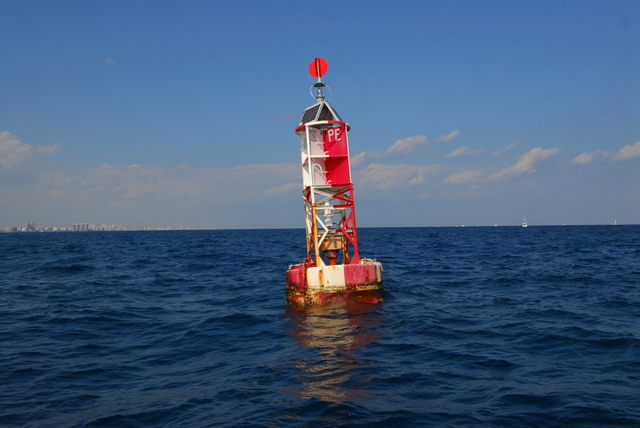
3. Port Everglades Inlet
Channel Marker about 2+ miles offshore due east of Port Everglades Inlet. It's a large single mark.
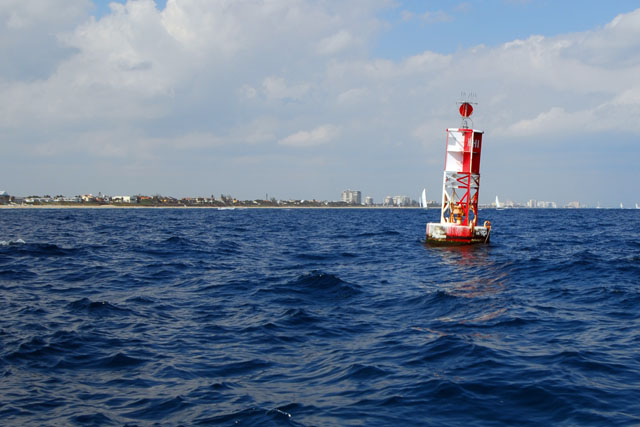
4. Hillsboro Inlet
Channel Marker - Just south of Hillsboro Inlet, due east of NE 16th Street Pompano, about 3/8 mile offshore.
Alternate Courses:
4 a. Substitute Northern Mark as Commercial Blvd. Fishing Pier (Anglin's Pier) Swim Buoy
4 b. Substitute Northern Mark as Sunrise Blvd. Swim Buoy
Anybody completing the long course will beat anybody finishing the next shorter course
5. Finish - Same as Start Line
Questions?
What about having a chase boat, jetski,
etc?
It's a long period to have someone on standby so getting a
volunteer with a boat is asking a lot. It would take quite a while and distance
to get someone to you anyway as a jetski or most people's personal boats can't
go very fast in the ocean, especially if it gets rougher. But with that said,
NEIL HUTCHINSON/ Kitesurf USA Instructor - CELL - 954-647-7228
may have a jetski available for rescue if you call him.
The fully charged cellphone in the waterproof bag is your
rescue boat. I personally feel anybody sailing offshore, or even Biscayne
Bay, would be wise to carry one every time they sail. Even in
a self rescue it's nice to call home and tell someone your situation that you
are running late so they don't worry or worse yet call unneeded rescue
services. I've been sailing offshore since I started windsurfing in 1979 and
have broken down a number of times but have always been able to self rescue or
have gotten a tow or ride in from a friendly boater I've been able to hail
within 15 minutes of my breakdown. Offshore winds are more of a concern because
you are drifting out instead of in, the phone is super crucial then. The good
news is, in onshore winds you drift in, the water is warm enough that
hypothermia is not a major concern and our boards are floaty enough to keep you
out of the water. My self rescue routine is to derig the sail and roll it up
and tie it on the board with outhaul or downhaul lines. (Carrying a spare line
in your harness is a smart precaution as well). I use the mast top or bottom
section as a kayak paddle and kneel over the sail on the board and paddle in.
You make amazingly good time back to the beach in this mode. It is hard to
paddle into the wind so if you are downwind of where you started you probably
won't wind up where you originated. You can call a cab or a fellow sailor for a
ride back from your cellphone.
I called the Coast Guard office in Miami and confirmed what
happens when you call. The number below is a 24x7 command center and fields
emergency calls. If you call 911 you'll get routed to the local fire department
and they will probably call the Coast Guard office in Miami. Some local police
departments have boats and I suspect they could be dispatched as an alternate.
Coast Guard - 305-535-4472
Police - 911
Sea Tow Fort Lauderdale, 954-525-0037 - Expensive. Minimum
charge, $275 and it will probably be higher. They suggested as a windsurfer you
call the Coast Guard
I would recommend you put the Coast Guard as a speed dial for
the race in case you get in trouble as it can be hard to see your cell phone
display on the water. Mine is speed dial #7 for the Coast Guard number above.
You should dial 911 without a problem. The Coast Guard would be the most likely
rescue source if things got bad and you were hurt or blowing offshore in case we
go in offshore wind. If you don't want to take your regular cell phone with,
take an old deactivated and charged phone and dial 911. 911 calls work on any
cell phone that can power on.
What about help getting out through the shore
break?
The shore break can be daunting, even to experienced
windsurfers. It is a major concern in some conditions, i.e. straight
onshore and big shore pound, that make it a very risky proposition. Each sailor
needs to weigh their skill getting out and in and make a decision as to whether
they can make it and if they can afford to break their gear. It's doubtful
manufacturers will warranty race equipment broken in the surf so you need to
make the choice as to is it worth it because it ultimately will be your loss.
With that said, it should not be a problem to have someone watching out when
those who want help launching can help and attempt to divert problems, but
that's not a guarantee of safety either. The other option is for a more
experienced person to sail the gear out through the break with the understanding
that if they crash and break your gear helping you it's not their fault. Stuff
happens, and it can happen to anybody. Of course, tips and advice are always
available for the asking from more experienced windsurfers.
Hope this answers your questions. The i-to-i is not an easy
race. It is a personal challenge on many fronts. It builds character and
experience and is very rewarding when you progress. Weather conditions are
always unpredictable. Use your head on the water and be prepared.
Good Luck!
Ron